

Low vision is a visual condition affecting millions of people worldwide, characterised by a significant loss of vision that cannot be fully corrected with conventional glasses and contact lenses, medication or conventional surgery. Although sufferers maintain some functional vision, their quality of life and autonomy are affected. Throughout this article we will look at some of the aids that exist today.
There are several pathologies that lead to low vision, especially the following:
These diseases generate a progressive or sudden loss of vision which, if not properly addressed, severely limits the daily life of those affected.
Symptoms may vary depending on the disease causing the low vision, although there are some common symptoms that occur regularly:
This symptom is characterised by constant difficulty in focusing clearly in everyday tasks that we carry out on a day-to-day basis such as cooking, picking up objects, cleaning, recognising shapes that we normally see, etc.
Many people affected report intense discomfort in bright lights, or difficulty adapting to changes in light, causing significant discomfort in everyday environments. In particular, when entering a low-light environment, it takes them a long time to see. They may also have trouble distinguishing items correctly in these dark environments, such as walking at night.
Reduced visual field can make it difficult to move around safely, increasing the risk of falls and accidents in the home or workplace.
Although there is no absolute cure for low vision, there are several treatments that allow patients to make the most of their remaining vision, considerably improving their quality of life.
Today, the most modern and effective optical aids include:
The choice of these tools will depend on the specific needs of the patient, following a thorough assessment of their vision and daily activities.
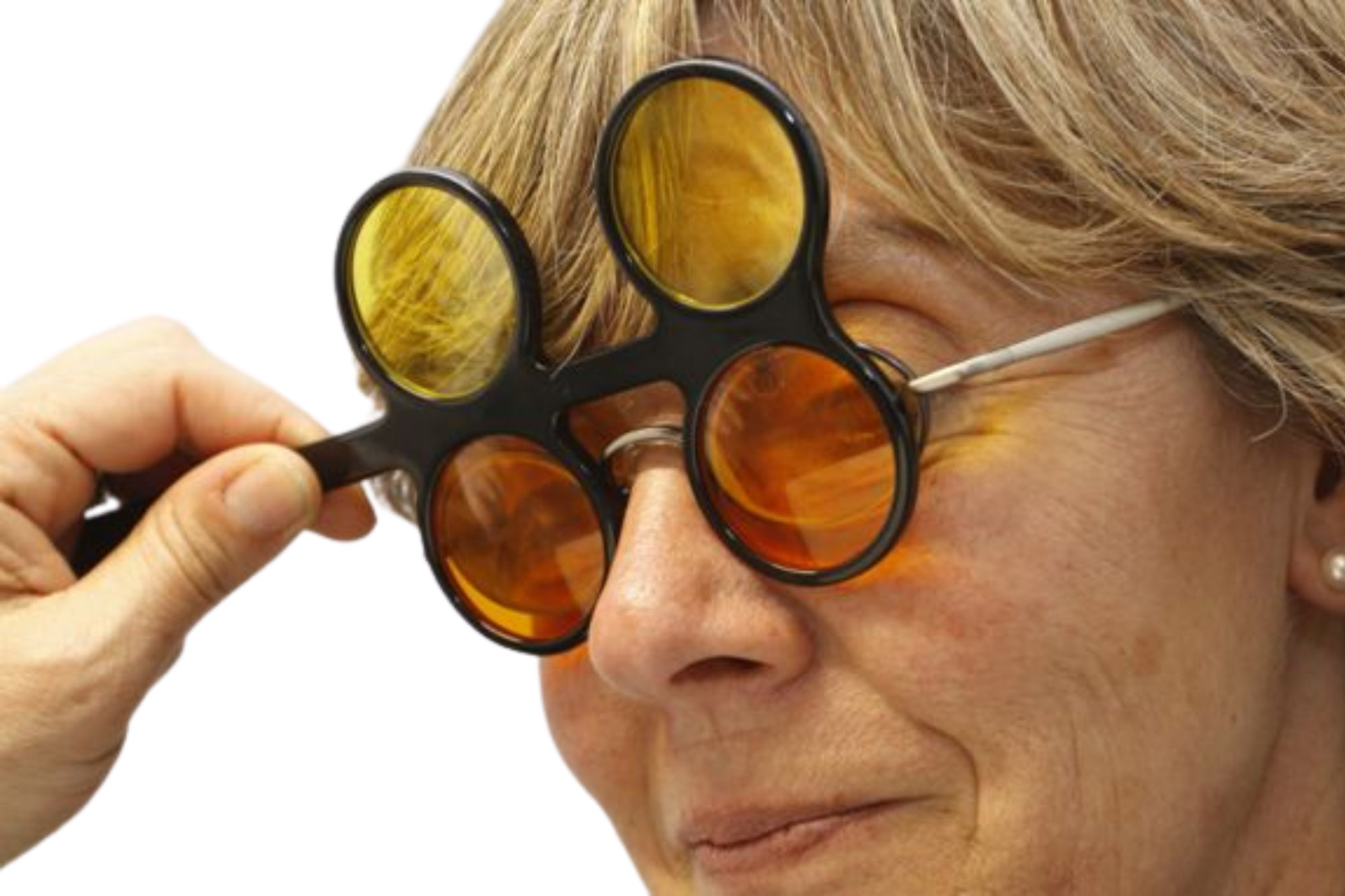
Protective filters are an essential element in the management of low vision, especially to reduce the effects of glare and improve contrast. Some of the most commonly used are:
Each patient should test and select the filter that best suits their visual situation and personal comfort.
The EyeMax mono lens serves to project images onto a larger central area of the eye, allowing the patient to see more clearly around the area affected by the disease. More information can be found here.
This is an intraocular lens with a central magnification of +10 dioptres that improves near vision. It allows you to read and see small details without affecting distance vision, eliminating the need for external magnifiers for daily reading.
The prescription of individualised aids is a detailed process that involves a thorough assessment by low vision specialists:
The first step is to clearly identify the patient's daily activities, such as reading, watching television or walking outdoors.
Once needs are identified, different aids are tested to determine which provides the most comfort and best visual performance in practical situations.
To maximise effectiveness, supervised training is crucial to allow the patient to become fully familiar with the new tools and to optimise their daily use.
Treatment does not end with the delivery of the visual aids. Regular reviews are essential to adapt the solutions according to the patient's visual evolution and any changes in their needs.
Vision can change over time, and tools must be adapted accordingly, ensuring a constant improvement in the patient's quality of life.
In addition to technical adjustments, psychological support and comprehensive vision rehabilitation play a key role, helping the patient to adapt emotionally to changes in their lifestyle.
Low vision presents significant challenges, but thanks to comprehensive treatment that includes personalised optical aids, specific protective filters and continuous rehabilitation, it is possible to maintain an active and independent life. Early detection, personalised treatment and appropriate follow-up by specialised professionals are the key to significantly improving the quality of life of people living with this visual condition.


Dr. J. Martín - Oftalmología ha sido beneficiaria de Fondos Europeos, cuyo objetivo es la mejora de la competitividad de las PYMES, y gracias al cual ha puesto en marcha un Plan de Acción con el objetivo de reforzar la digitalización y la competitividad de las pymes durante el año 2024. Para ello ha contado con el apoyo del Programa Pyme Digital de la Cámara de Comercio de Tarragona. #EuropaSeSiente
Dr. J. Martín - Oftalmología ha sido beneficiaria de Fondos Europeos, cuyo objetivo es la mejora de la competitividad de las PYMES, y gracias al cual ha puesto en marcha un Plan de Acción con el objetivo de impulsar el uso seguro y fiable del ciberespacio y la competitividad de las pymes durante el año 2024. Para ello ha contado con el apoyo del Programa Pyme Cibersegura de la Cámara de Comercio de Tarragona . #EuropaSeSiente

