

Visual loss caused by this ocular condition has become one of the leading causes of blindness worldwide. Because it presents no noticeable symptoms in its early stages, many people only discover its existence when the optic nerve has already suffered irreversible damage. Understanding its risk factors and detection methods can make the difference between preserving vision or facing permanent complications.
The internal pressure of the eye, also known as intraocular pressure, directly influences the onset and progression of this pathology. An excessive increase in such pressure can gradually damage the optic nerve, especially in people with a family history of glaucoma or certain systemic conditions like diabetes and hypertension. Since symptoms can go unnoticed in the beginning, periodic eye examinations play a decisive role. It is also important to note that normal-tension glaucoma may occur, which, even if intraocular pressure is not elevated, is a variant in which the optic nerve is also damaged, leading to the associated loss of visual field.
There are open-angle variants that progress without evident signs in their early stages, and closed-angle forms, characterized by a sudden rise in internal eye pressure that causes acute eye pain and blurred vision. In the case of closed-angle forms, they arise when the anterior chamber of the eye is very narrow, and the iris shifts forward, totally or partially blocking drainage of the aqueous humor. In these situations, vision loss is immediate and painful, and if a risk is detected during an examination, it can be prevented with laser iridotomies. This leads to a rapid increase in intraocular pressure. Congenital or secondary cases can also occur, resulting from other eye problems or prolonged use of certain medications.
Very often, people do not know how a person with glaucoma sees when the disease is in its early stages. Initially, the damage tends to concentrate on the periphery of the visual field, so the individual does not notice it immediately. However, as the clinical picture progresses, peripheral vision is significantly reduced, causing objects located to the sides to blur or disappear.
To better understand how a person with glaucoma sees during late phases, one can imagine a slow narrowing of vision that ends in a “tunnel” effect. As the disease advances, the ability to distinguish fine details and general clarity worsen, making it difficult to read, recognize faces, or move safely in large open spaces.
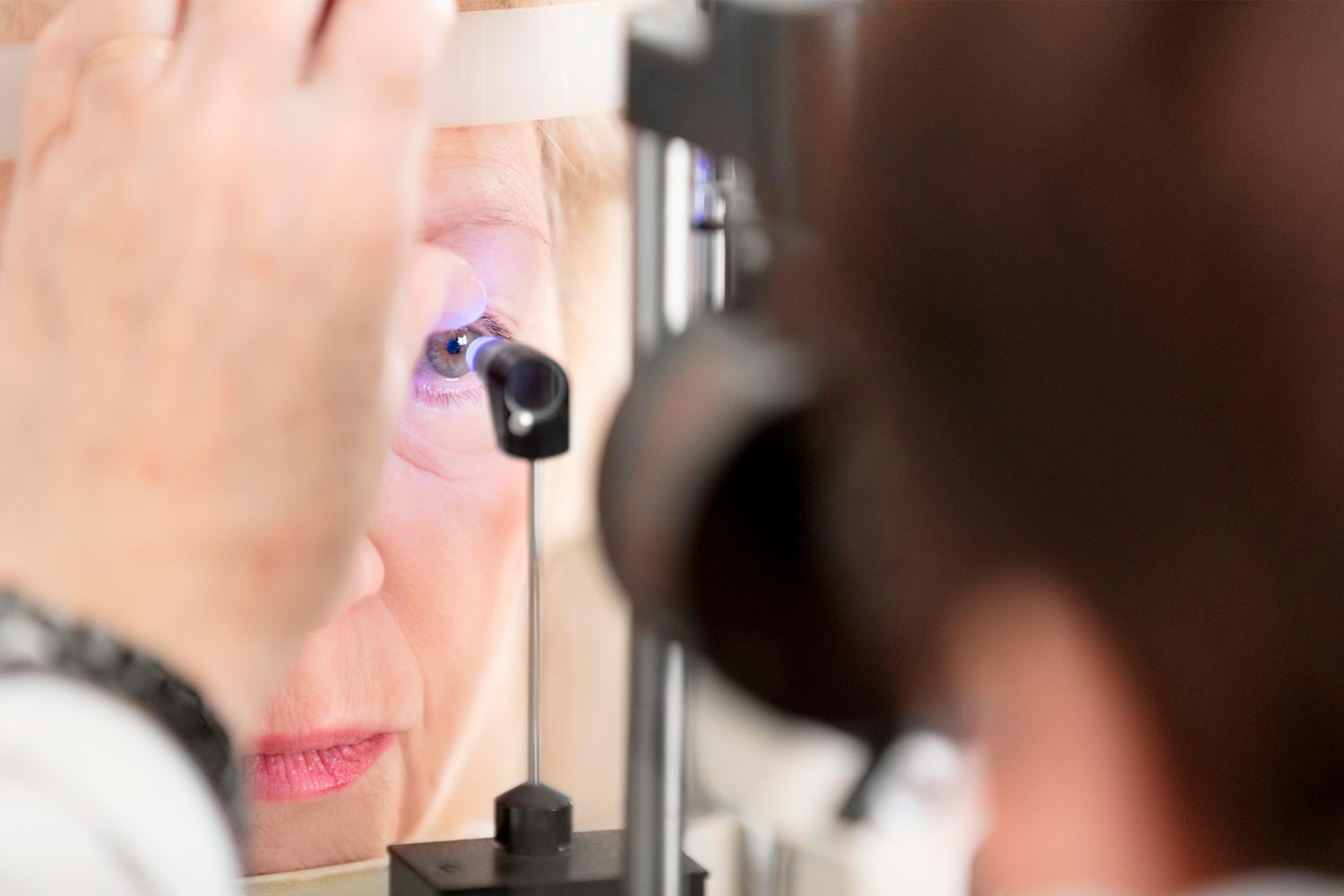
Early detection of glaucoma is based on specific ophthalmological examinations. Tonometry measures the eye’s internal pressure, while ophthalmoscopy assesses the condition of the optic nerve. In addition, visual field testing (perimetry) can identify losses in the visual field that the patient may not have noticed. Paquimetry, which measures corneal thickness, is also used to better interpret intraocular pressure and adjust the diagnosis and treatment of glaucoma more precisely. Furthermore, OCT (Optical Coherence Tomography), a noninvasive imaging test, produces detailed cross-sectional images of the retina and the optic nerve to detect early damage, allowing for more accurate monitoring of glaucoma. All these procedures help categorize the type of issue and design the most appropriate therapeutic strategy.
Although the damage cannot be reversed, it is possible to slow the disease’s progression using eye drops, laser therapy, or surgery. However, people often wonder how a person with glaucoma sees once therapy begins. Generally, if treatment starts early, visual deterioration stabilizes and advances at a much slower pace, enabling a better quality of life.
Unhealthy habits can exacerbate this pathology. Poorly controlled blood pressure or an unhealthy lifestyle increase the risk of complications. It is also important to note that high myopia is a risk factor. Moreover, not undergoing regular eye check-ups can delay a timely diagnosis. If you are among those who frequently ask how a person with glaucoma sees in its initial stages, the usual answer is that changes are subtle, which is why visiting an ophthalmologist remains crucial to confirm or rule out its presence.
Maintaining strict control of intraocular pressure, monitoring systemic diseases, and attending regular ophthalmologic evaluations help diagnose glaucoma early. Although it cannot be permanently cured, it can be managed with the right combination of treatments and periodic check-ups. Following medical instructions and keeping scheduled appointments are essential steps to preserve peripheral vision for as long as possible.
Identifying warning signs and acting quickly is vital to avoid irreversible consequences. Knowing how a person with glaucoma sees and understanding preventive measures encourages us to take proactive action. While this disorder progresses silently, timely diagnosis increases the likelihood of preserving vision. Having regular eye exams and adopting healthy habits are indispensable strategies for safeguarding long-term eye health. For any further questions, feel free to contact us.


Dr. J. Martín - Oftalmología ha sido beneficiaria de Fondos Europeos, cuyo objetivo es la mejora de la competitividad de las PYMES, y gracias al cual ha puesto en marcha un Plan de Acción con el objetivo de reforzar la digitalización y la competitividad de las pymes durante el año 2024. Para ello ha contado con el apoyo del Programa Pyme Digital de la Cámara de Comercio de Tarragona. #EuropaSeSiente
Dr. J. Martín - Oftalmología ha sido beneficiaria de Fondos Europeos, cuyo objetivo es la mejora de la competitividad de las PYMES, y gracias al cual ha puesto en marcha un Plan de Acción con el objetivo de impulsar el uso seguro y fiable del ciberespacio y la competitividad de las pymes durante el año 2024. Para ello ha contado con el apoyo del Programa Pyme Cibersegura de la Cámara de Comercio de Tarragona . #EuropaSeSiente

